
I’m writing this with a heating pad on my back, full of ibuprofen and an ice pack on my shoulder—battle wounds from another long day in the kitchen. As I limped through service today, I started thinking: if chefs had trading cards, they’d probably look a lot like athlete profiles—minus the million-dollar contracts. We may not wear helmets or get cheered on by stadiums of fans, but make no mistake: chefs are athletes.
Think about it.
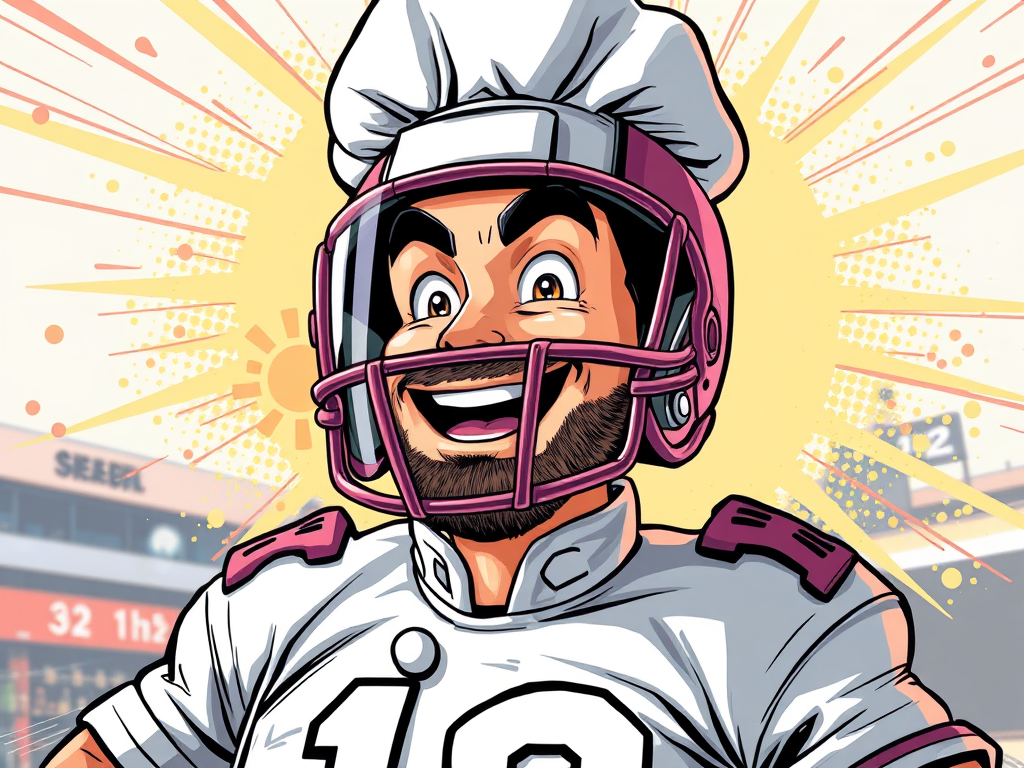
Just like a quarterback needs to know the playbook inside and out, a chef has to memorize recipes and execute with precision under pressure. A missed step, a wrong call, and the whole dish—or service—can collapse. Every movement on the line has to be purposeful. There’s no time for hesitation, just like in sports.
Fast Twitch, Quick Cuts, and Long Hours
Athletes are praised for their agility and quick reflexes—so are chefs, we just trade turf for tile. Working in a high-paced kitchen demands fast-twitch muscle movement: one second you’re slicing fish with exacting precision, the next you’re spinning to dodge a coworker with a pan of hot oil. There’s no room for slow reactions in a space with knives, heat, fire, and steam.
The endurance required to be on your feet for 10–12 hours straight, moving fast in high heat, lifting 50-lb bags of rice, running trays up and down stairs—it’s not so different from playing four quarters under the sun. The “court” might be smaller, but the wear and tear on the body is real.
Injuries: A Shared Story
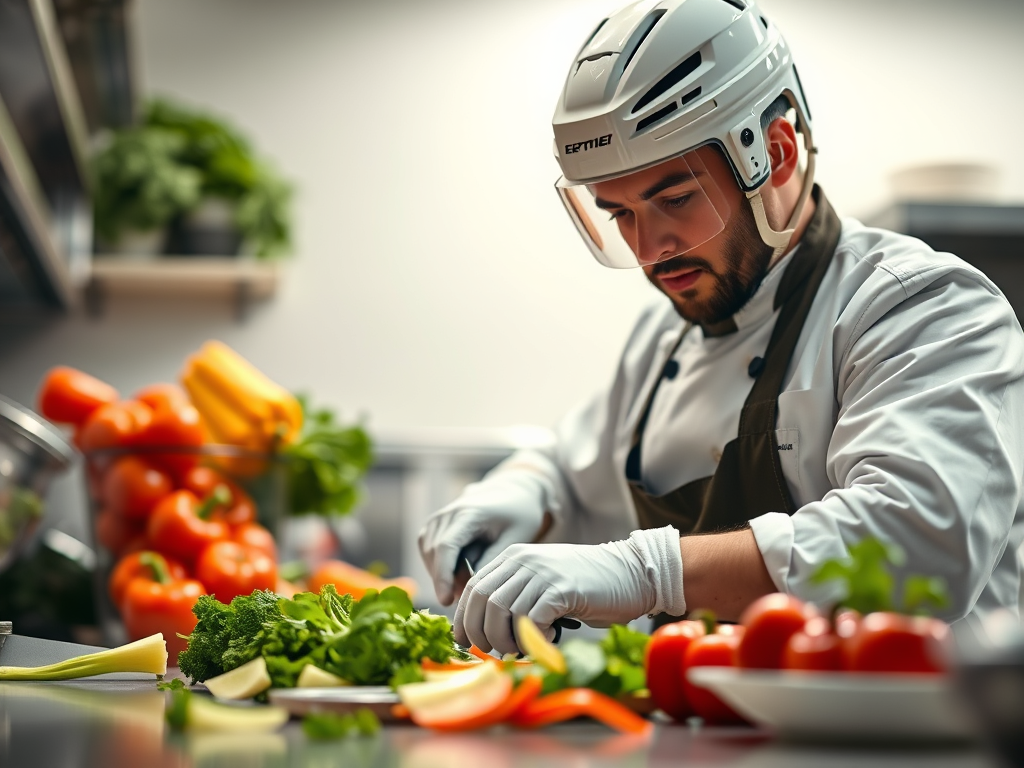
Over the years, I’ve seen—and had—my share of injuries: torn rotator cuffs, bad knees, slipped discs, you name it. Sounds like a football team’s injury list, right? But it’s the reality of many chefs. We work through pain. We wrap up sore joints and keep moving because the show must go on. There’s no second string in a small kitchen.
It’s not just physical either. Mental toughness is part of the job. You have to push through stress, fatigue, pressure, and sometimes, the mental toll of perfectionism. It’s not unlike the mindset athletes cultivate when they’re grinding through playoffs or bouncing back after a loss.
Training, Practice, Performance
Athletes train, run drills, watch film. Chefs train too—we stage, we prep, we refine our techniques. Every service is like a game. We run plays: appetizers, entrees, desserts. We rely on our team. We hustle, communicate, and trust each other to execute. A great service, like a great game, feels electric.
And just like athletes who play in less-than-ideal conditions—think rain, mud, heatwaves—chefs often work through broken equipment, tight storage, short staffing, and yes, even while injured. It takes grit.

Kitchen Trench Story #1: The Cost of Cutting Corners
There was a time in my career when I was part of a dining operation that served 5,000 meals a day. We were short-staffed, and as a precautionary measure, I requested we switch to buying pre-cut fajita meat and diced pork for some of our most popular dishes. Why? Because I was spending up to three hours a day butchering meat. It wasn’t sustainable, and more importantly, I warned leadership that it was a safety issue. One wrong cut or moment of fatigue could result in an injury.
But the response I got? “Our food cost is great right now—I don’t want to jeopardize that.”
Three weeks later, after butchering hundreds of pounds of meat daily, my right wrist and elbow gave out. I blew them both out. The swelling was immediate, the pain unbearable. I ended up needing surgery and was out for three months. Thankfully, I had good insurance and had banked 600 hours of sick leave. Still, it didn’t have to happen.
Sometimes the people making decisions in dining services come from accounting or pharmaceutical backgrounds—worlds away from the kitchen. They’ve never stood on the line, never made 500 covers with a skeleton crew, and yet they call the shots. That particular executive has since moved on—”failed up,” as they say—but I’m still here, faster with a knife than ever, and thankfully now reporting to someone who actually listens.

Kitchen Trench Story #2: The “Backup Plan” That Wasn’t
Then there was the holiday weekend when we lost power to one of our walk-ins during a heatwave. Most people would panic. We didn’t have time for that. We had a catered wedding for 250 the next morning, so we moved into survival mode.
With no backup generator and limited space in the remaining coolers, we had to triage our ingredients. Prep teams were reorganized, menus were adjusted in real-time, and we ran overnight rotation shifts to keep things cold by buying ice chests and continuously filling them with ice. It was a sweaty, exhausting, 36-hour blur.
The next day, we served every guest. No one knew the chaos behind the scenes. That’s what we do—we show up, adapt, and execute. Chefs don’t just cook—we compete, and we win with grit, teamwork, and creative hustle.
More Alike Than You’d Think
I’ve started seeing the parallels everywhere: teamwork, conditioning, discipline, recovery. The pressure to perform at a high level. The love of the craft. The drive to improve every day.
Chefs are culinary athletes. We might not have ESPN highlights or fans tailgating outside the dining room, but what we do demands the same passion, precision, and perseverance.
So here’s to all the chefs limping into the kitchen, pushing through pain, juggling pans like it’s a championship game. You’re not just cooking—you’re competing. And every service is your chance to win.


 Culinary Connections